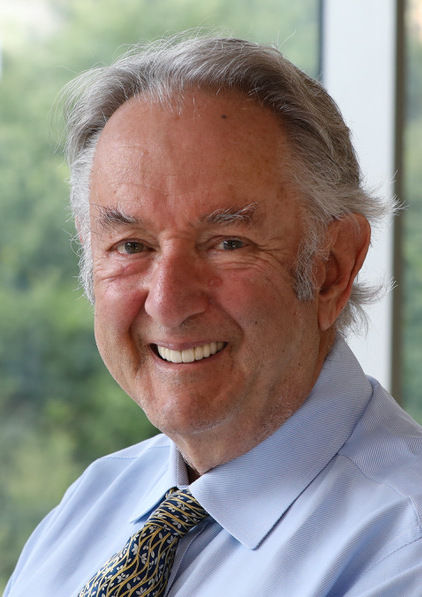
Dr. K. Ullas Karanth
About Me
Born in 1948, I am the son of noted writer Kota Shivarama Karanth. Trained first as a mechanical engineer (NIT Surathkal, 1971), I shifted to wildlife biology, earning an M.S. from the University of Florida (1988) and a Ph.D. from Mangalore University (1993). I founded the Centre for Wildlife Studies (1984), where I now serve as Emeritus Director, and directed the Wildlife Conservation Society–India Program (1988–2017). I also hold adjunct faculty positions at universities in the USA, Thailand, and India.
For over five decades, I have studied the ecology of tigers, predators, and prey in India and Thailand, specializing in large carnivore ecology, animal population analysis, conservation biology, and policy. I have published 150+ scientific papers, numerous popular articles, and authored/edited several influential books including The Way of the Tiger, Science of Saving Tigers, Among Tigers (2023), and Growing up Karanth (2021). I have also written notable works in Kannada.
I serve on several IUCN specialist groups and have advised India’s Forest Advisory Committee, National Tiger Conservation Authority, and global organizations like WWF. Recognitions include the Padma Shri (2012), Sierra Club EarthCare Award (2006), WWF-J. Paul Getty Award (2007), and Distinguished Alumnus honors from NIT Surathkal, University of Florida, and St. Aloysius College.
I live in Bengaluru with my wife, Prof. Prathibha Karanth, a speech and language scientist. Our daughter, Dr. Krithi Karanth, is also a leading conservationist and the current Director of Centre for Wildlife Studies.

Species of Interest


Testimonials

Dr. George B. Schaller, Emeritus Scientist
Wildlife Conservation Society
Ullas Karanth is a superb field biologist focused on the tiger and its prey and the preservation of tiger habitats. He is generally considered the best tiger biologist in the world. Meticulous and visionary, he has changed how tigers and other large carnivores are counted and monitored by developing accurate techniques

Dr. Alison F. Richard, DBE
Vice-Chancellor Emerita, Cambridge University
Ullas Karanth’s commitment to continued survival of wild tiger populations is deep and long-standing. The scientific innovations he brought to bear have transformed our knowledge and understanding of wild tigers in India and the impact of his work extends across all tiger range countries.

Dr. Jeffrey D. Sachs
Professor, Columbia University
Among Tigers is a unique book by a unique author. Ullas Karanth has devoted his life to the understanding and protection of the endangered tigers of Asia. For all those who care about the humanities place in a safe world, this book is fascinating and important reading.
Dr. Stuart L. Pimm
Professor, Duke University and President, Saving Nature
Among tigers is a tale of high adventure..Ullas Karanth brings science to tiger conservation, confronts managers and politicians alike, and never forgets the needs of local people who must live with tigers.

Dr. John G. Robinson
Joan L. Tweedy Chair, Wildlife Conservation Society
Ullas Karanth is globally respected as both a scientist and a conservationist. He is today one of the most prolific communicators in conservation, both using the written word and a wonderful ability to lecture and inspire.

Dr. James D Nichols
Emeritus Scientist, US Geological Survey
Ullas Karanth’s work on tiger population and community ecology has provided answers to fundamental scientific questions in multiple disciplines. This work required development of new field methods, as well as new methods of analysis that represented important innovations in statistical science.

Dr. John Terborgh
Emeritus Professor, Duke University
First obsessed with tigers as a boy in southern India, Ullas Karanth made conserving them his career. Through years in the field tigers teach him how to advance their conservation.

Dr. David Western
Fromer Director of Kenya Wildlife Service, and author
Ullas Karanth shows how sound science and a deep compassion for wildlife and people can win an enduring place for tigers in the face of the gravest political obstacles and modernizations.

Dr. Mel Sunquist
Emeritus Professor, University of Florida.
A fifty-year personal journey from reluctant engineer to farmer, biologist and finally on of the world’s foremost tiger conservationist… Karanth’s singular, lucid account leaves us convinced there is hope for the tiger’s future.

Dr. Dale Miquelle
Coordinator, Tiger Program, Wildlife Conservation Society
Mincing no words, Karanth makes the case for science-based conservation of tigers and the need for hard, grind-it-out fieldwork, but also explain why science is not enough.

Dr. Ruth DeFries
Professor, Columbia University
Ullas Karanth, world-renowned tiger expert, lays bare the hardscrabble. From the science of tiger tracking to the dirty politics of corrupt bureaucrats. Based on his decades of fighting for tigers, his prescriptions for conservation stem from the reality on the ground.

David Quammen
Naturalist, and Author
There is no creature more magnificent than the tiger, and there is no scientist who knows it better than Ullas Karanth. Despite all the factors piled against the tigers survival, his work will give you some hope.

Sy Montgomery
Naturalist, and Author
Ullas Karanth is a tiger conservation hero, and his story is shocking, riveting and devastating but in the, hopeful…it is a splendid and important testament to what it takes to save this storied apex predator in a world swarming with humans and awash in greed and needs.

Douglas Chadwick
Wildlife Biologist and, Author
Drawn to nature since childhood, Ullas Karanth became the first person in India to radio-track its fabled tigers. He continued to studying them for decades.

Ruth Padel
Professor of Poetry, Kings college London
Ullas Karanth makes a compelling case that humanity needs to save tigers for its own good.
Field of Expertise


ASSOCIATED INSTITUTIONS




.png)